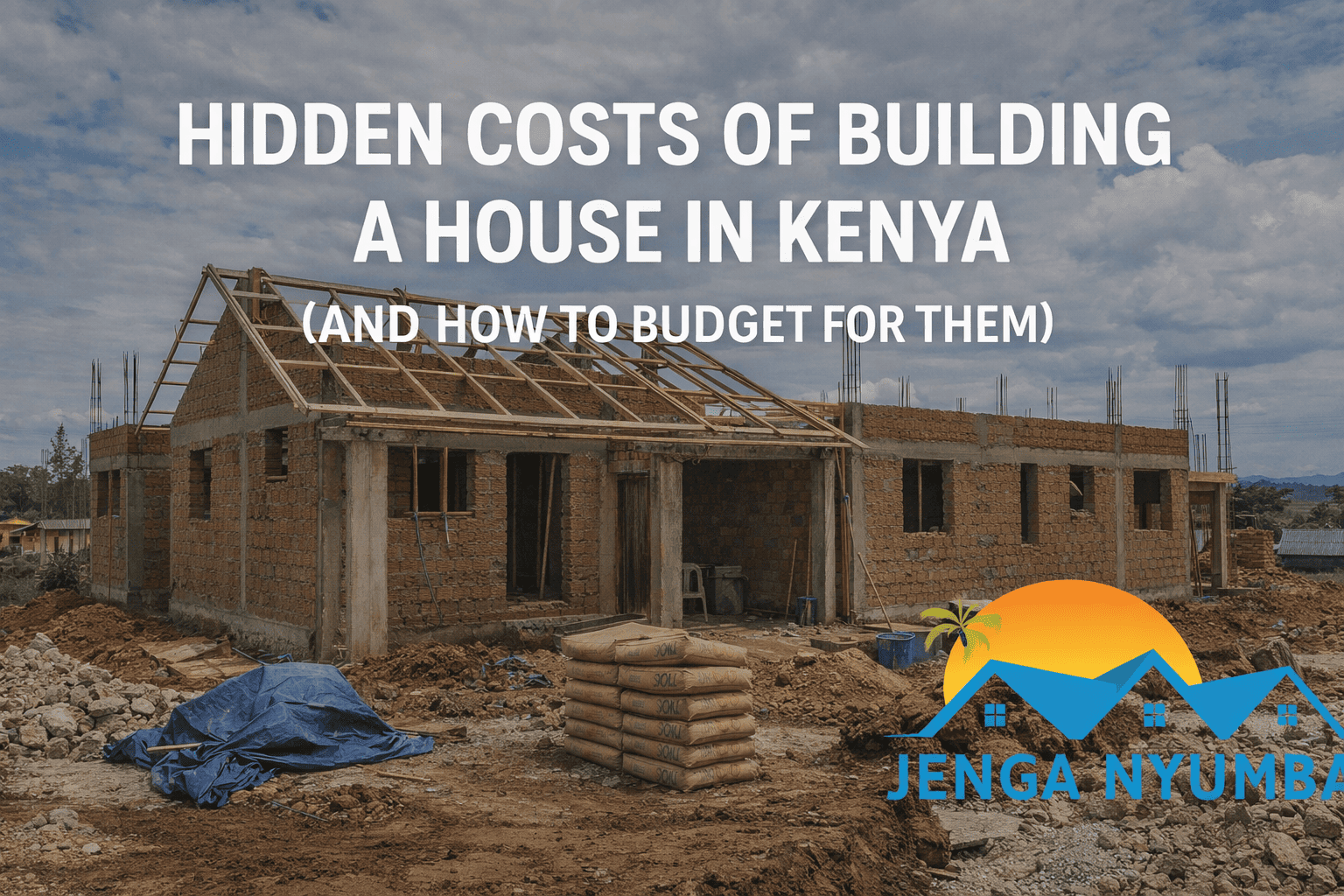
Hidden Costs of Building a House in Kenya (And How to Budget for Them)
Most people budget for bricks, cement, and labour.
Then the money runs out halfway through the project.
Not because they planned badly.
But because nobody told them about the hidden costs of building a house in Kenya
.
Introduction
Building a house in Kenya is not just about materials and labour.
There are many silent expenses that hit later and blow up budgets.
This guide shows the real hidden costs of building in Kenya and how to prepare for them.
If you’re planning to build, read this first.
1. Land-Related Costs Most People Forget
Buying land is not the end.
You will also pay for:
- Title search
- Transfer fees
- Stamp duty
- Survey and boundary verification
- Land rates and land rent arrears
Typical Range:
KES 50,000 – 300,000 depending on location and land value.
How to avoid surprises
- Ask for land rates clearance certificate before paying.
- Do title search personally via ArdhiSasa or Lands Office.
- Budget 5–7% of land price for legal fees.
2. Architectural and Approval Fees
You cannot build legally without approved drawings.
Costs include:
- Architectural drawings
- Structural drawings
- County approval fees
- NCA registration
Typical Range:
KES 80,000 – 250,000 for small to medium homes.
How to control this cost
- Use registered professionals only.
- Avoid shortcuts. Illegal plans cost more later.
3. Site Clearing and Excavation
Raw land is rarely build-ready.
You may need:
- Bush clearing
- Tree removal
- Excavation
- Soil replacement
Rocky areas are especially expensive.
Typical Range:
KES 30,000 – 200,000+
Tip
Do a site visit with a fundi before finalizing land purchase.
4. Soil Testing and Foundation Adjustments
Weak soil means deeper or stronger foundations.
That means:
- More excavation
- More cement
- More steel
Typical Range:
KES 15,000 – 40,000 for soil test.
Foundation upgrade can add KES 100,000 – 500,000+.
Hard truth
Skipping soil testing is gambling.
5. Utility Connection Fees
Connecting your house is not free.
Expect to pay for:
- Electricity connection
- Water connection
- Sewer or septic system
- Internet installation
Typical Range:
KES 50,000 – 200,000+
6. Material Price Fluctuations
Cement, steel, timber, and blocks change price constantly.
A bag of cement can jump KES 150 in one month.
If your build lasts long, costs rise.
How to protect yourself
- Buy materials in phases but track prices.
- Lock supplier prices where possible.
- Add price escalation buffer.
7. Wastage and Theft
Reality:
- Materials get wasted.
- Some get stolen.
- Some get damaged.
Typical Loss:
5–10% of material cost.
Control measures
- Store materials securely.
- Keep daily records.
- Supervise deliveries.
8. Design Changes Midway
You decide to:
- Add a room
- Increase window size
- Upgrade finishes
Every change costs money.
Even small changes compound.
Rule
Finalize design before starting.
No emotional upgrades mid-build.
9. Finishing Works That Add Up
People underestimate finishes.
These include:
- Tiles
- Paint
- Doors
- Cabinets
- Lighting
- Sanitary ware
Finishes can consume 30–40% of total budget.
10. Professional Supervision
If you don’t pay for supervision, you pay for mistakes.
- Cracked walls
- Wrong levels
- Poor reinforcement
Typical Cost:
KES 30,000 – 100,000+
Cheap supervision is expensive.
Example Hidden Costs of Building a House in Kenya
Breakdown (KES 3M House)
| Item | Approx Cost |
|---|---|
| Legal & land extras | 120,000 |
| Approvals & drawings | 150,000 |
| Site works | 90,000 |
| Utility connections | 120,000 |
| Wastage & theft | 180,000 |
| Price increases | 200,000 |
Extra total: KES 860,000
That’s almost 30% more than the original budget.
How Much Contingency Should You Add?
Minimum: 15%
Recommended: 20–25%
If your build budget is KES 5M:
Add KES 1M contingency.
No debate.
Actionable Takeaways
- Always budget contingency.
- Do soil testing before design finalization.
- Track prices monthly.
- Lock designs early.
- Use professionals.
- Supervise daily or weekly.
Conclusion
Hidden costs are not accidents.
They are predictable.
If you plan for them early, your project stays alive.
If you ignore them, your project stalls.
For verified suppliers, material prices, and building guidance, visit Jenga Nyumba.
Build smart.
Build prepared.